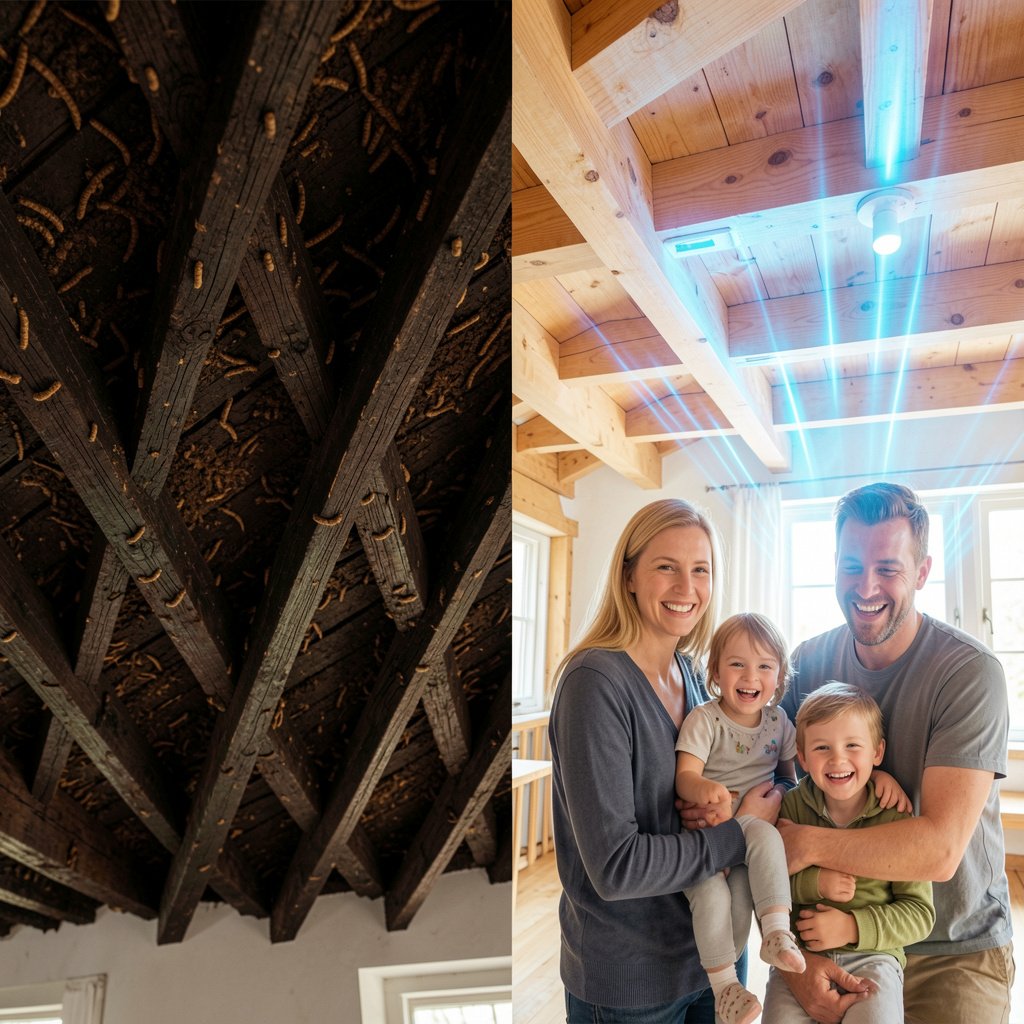
Woodworm infestations are a common problem in homes, historic buildings, furniture, and timber structures. These tiny pests often remain hidden inside wood for years, silently weakening beams, floors, roof timbers, and valuable wooden items. When homeowners discover small exit holes or piles of fine wood dust, they often wonder how long it will take to solve the problem.
Modern technology has changed the answer. While traditional chemical treatments may require repeated applications and time to work, microwave technology can begin eliminating active woodworms during the treatment process itself. Innovative solutions from Shashel use carefully controlled microwave energy to target wood-boring insects deep inside timber—without relying on chemical pesticides.
So, can you really eliminate woodworms in minutes? The answer depends on the size and location of the infestation, but the science behind microwave treatment makes rapid, localized treatment possible.
Understanding the Woodworm Life Cycle
Before exploring how microwave treatment works, it’s important to understand why woodworms are so difficult to remove.
Despite their name, woodworms are actually the larvae of wood-boring beetles. Adult beetles lay eggs in cracks or existing holes in timber. Once the eggs hatch, the larvae tunnel into the wood and feed on its cellulose.
This hidden stage can last anywhere from two to several years. During this time, the larvae remain safely protected beneath the wood’s surface, making them difficult to reach with conventional surface treatments.
Because the insects spend almost their entire lives inside timber, successful treatment must reach well below the surface.
Why Traditional Treatments Often Take Longer
For decades, woodworm infestations have been treated using liquid insecticides and wood preservatives.
Although these products can help protect timber, they also have limitations.
Traditional treatments often:
- Penetrate only the outer layers of wood
- May not reach deeply hidden larvae
- Sometimes require multiple applications
- Leave chemical residues behind
- Depend on insects contacting treated areas
For active infestations, these limitations may slow the overall treatment process.
This has encouraged many professionals to adopt newer technologies such as those developed by Shashel.
The Science Behind Microwave Treatment
Microwave technology works very differently from chemical insecticides.
Instead of poisoning insects, microwave devices generate controlled electromagnetic energy that passes through the timber.
Woodworm larvae contain significantly more moisture than dry wood. As microwave energy interacts with water molecules inside the insects, those molecules vibrate rapidly and produce heat.
Once the insects reach a lethal internal temperature, they are eliminated.
This process affects:
- Eggs
- Larvae
- Pupae
- Adult beetles present inside the treated timber
Because the heating occurs during the treatment itself, microwave technology provides immediate action against active insects.
Can Woodworms Really Be Eliminated in Minutes?
For localized infestations, yes.
Professional microwave systems are capable of raising the temperature within targeted areas of timber in a relatively short period. Once the required temperature has been achieved and maintained for the appropriate time, the insects inside that section of wood are eliminated.
However, it’s important to understand that the overall treatment time depends on the extent of the infestation. A single small beam or piece of furniture may be treated much more quickly than an entire roof structure with multiple affected areas.
Rather than saying an entire building can always be treated in minutes, it is more accurate to say that each localized treatment area can often be completed in a matter of minutes, making the overall process significantly faster than many traditional methods.
Modern Shashel microwave systems are designed for efficient, targeted treatment that minimizes disruption while maximizing effectiveness.
Why Speed Matters
Rapid treatment offers several practical benefits.
Less Disruption
Quick localized treatment allows homeowners and businesses to continue using much of their property without lengthy closures or repeated chemical applications.
Immediate Action
Unlike insecticides that may rely on delayed exposure, microwave treatment begins eliminating insects as soon as the target temperature is reached.
Reduced Downtime
Historic buildings, museums, churches, and commercial properties often benefit from treatment methods that reduce interruptions to normal operations.
These advantages make Shashel technology attractive for both residential and professional applications.
More Than Just Speed
Although fast treatment is appealing, effectiveness is even more important.
Microwave technology provides several additional advantages.
Deep Penetration
Microwave energy reaches insects hidden beneath the wood surface where surface-applied chemicals may not penetrate effectively.
Chemical-Free
The treatment requires no pesticides, insecticides, or toxic fumigants.
There are no lingering chemical odors or harmful residues after treatment.
Environmentally Friendly
Because no chemicals are introduced into the environment, microwave treatment supports sustainable pest management.
Preserves Valuable Timber
Historic beams, antique furniture, museums, churches, and heritage structures often require treatment methods that protect original materials.
Shashel microwave technology helps preserve valuable timber while eliminating active infestations.
Where Microwave Treatment Works Best
Microwave technology can be used for many different types of wooden structures, including:
- Roof beams
- Floor joists
- Timber framing
- Wooden ceilings
- Staircases
- Antique furniture
- Museums
- Churches
- Historic buildings
- Commercial timber structures
Its versatility makes it suitable for both modern homes and centuries-old wooden buildings.
What Happens After Treatment?
Once woodworms have been eliminated, the existing tunnels remain inside the timber. Microwave treatment removes the insects, but it does not “fill in” the damage already caused.
If the timber is structurally sound, no further action may be needed beyond monitoring and routine maintenance. If severe damage has occurred, a professional can advise whether repair or replacement is necessary.
To reduce the risk of future infestations:
- Keep timber dry.
- Repair leaks promptly.
- Improve ventilation.
- Reduce excess humidity.
- Inspect wooden structures regularly.
- Address early signs of beetle activity.
Good maintenance helps protect timber long after treatment has been completed.
Why Homeowners Are Choosing Microwave Technology
As awareness of sustainable building maintenance continues to grow, more property owners are choosing solutions that combine effectiveness with environmental responsibility.
Microwave treatment offers:
- Fast localized treatment
- Deep penetration into timber
- Chemical-free operation
- Minimal disruption
- No toxic residues
- Long-term protection when combined with proper maintenance
These advantages have made Shashel a trusted name for modern woodworm control.
Conclusion
Can woodworms really be eliminated in minutes? For localized areas, modern microwave technology makes rapid treatment possible by heating and eliminating insects directly inside the timber. While the total time required depends on the size of the infestation, microwave treatment begins working immediately once the necessary temperature is reached.